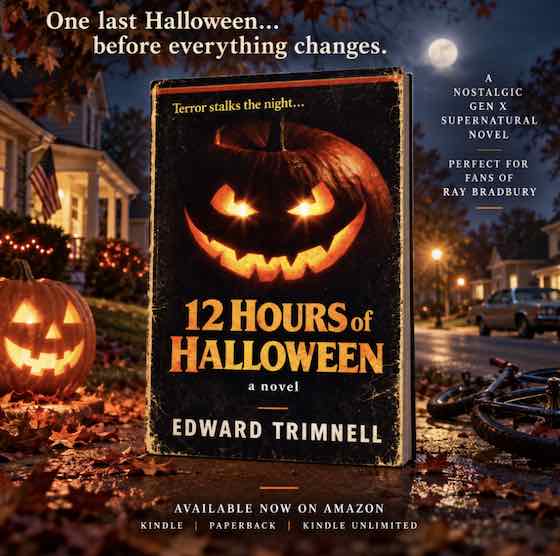
For some of us, Halloween is inseparable from memories of childhood: plastic masks, drugstore costumes, jack-o’-lanterns glowing on front porches, piles of candy, and suburban streets that seemed much darker and more mysterious after sunset.
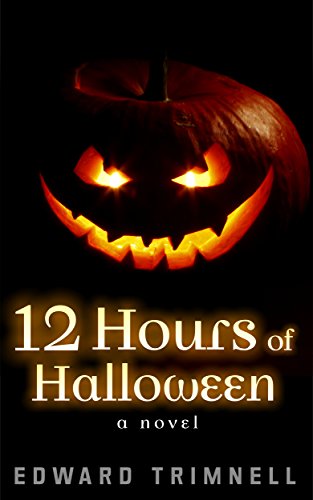
12 Hours of Halloween takes place on Halloween night in 1980. Three friends—Jeff Schaeffer, Leah Carter, and Bobby Nagel—decide to go trick-or-treating one final time before adolescence brings their childhood Halloween traditions to an end.
They expect an evening of candy, pranks, and perhaps a few manufactured scares.
Instead, they find themselves trapped in a very different kind of Halloween.
A sinister teenager known as the “ghost boy” warns them that they will endure twelve hours of trial. Soon their familiar suburban neighborhood begins to change around them.
Haunted houses. Possessed trees. Restless spirits. And a terrifying figure called the Head Collector, who roams the nighttime streets looking for his next trophy.
But 12 Hours of Halloween isn’t only about monsters.
It is also about that strange boundary between childhood and adolescence—when old friendships begin to change, childhood certainties disappear, and feelings that were once simple suddenly become complicated.
Jeff believes he is falling in love with Leah. His longtime friend Bobby, meanwhile, is becoming someone Jeff no longer completely understands.
And all of this happens during a single long Halloween night.
A Halloween story for the Gen X generation
I wrote 12 Hours of Halloween very much in the tradition of the supernatural stories I grew up with.
If you enjoy the autumnal nostalgia and childhood wonder of Ray Bradbury—particularly stories in which the ordinary world seems only a few steps away from something strange and supernatural—you may find something familiar here.
The setting is deliberately Gen X: Halloween 1980, before smartphones, before social media, and before parents could track their children electronically.
Three kids go out into the October darkness, largely on their own.
And the darkness turns out to contain far more than they bargained for.
12 Hours of Halloween is a coming-of-age story, a supernatural thriller, and a nostalgic trip back to the Halloweens of another era.
With October almost here, this is a good time to take that trip.
12 Hours of Halloween is available on Amazon in Kindle and paperback editions. It is also available to read through Kindle Unlimited.
There are still plenty of places in Ohio where you can get off the interstate and, within twenty minutes, find yourself on a narrow country road surrounded by woods, fields, old houses, and small towns.
Those are the places I often have in mind when I write horror.
I’ve always thought that familiar, ordinary settings make some of the best settings for supernatural fiction. An abandoned castle is already creepy. So is a ruined monastery at midnight. The writer doesn’t have to do much work to convince you that something frightening might happen there.
But what about the gas station you’ve passed dozens of times? Or an old country graveyard beside a two-lane road? What about a patch of woods that looks perfectly harmless at four o’clock in the afternoon—but considerably less inviting as the sun begins to go down?
That’s the territory of “Don’t Stop for Gas in Zombie Country,” the short horror story in the video above.
The setup is deliberately simple: an ordinary trip through the Ohio countryside, an inconvenient need for gasoline, and a small rural gas station.
Then things begin to go wrong.
This is also the kind of story I’ve been exploring in my Uncanny Ohio series: macabre tales built around Ohio places, local history, forgotten corners, and the unsettling possibility that the ordinary landscape around us may contain things we don’t quite understand.
Kindle Unlimited is Amazon’s main subscription ebook reading program. Kindle Unlimited gives you virtually unlimited (hence the name) reading privileges to a wide variety of titles, for a low monthly fee.
Not every title listed on Amazon is enrolled in Kindle Unlimited. Literary fiction from the big New York publishing houses generally is not included. You likely won’t find the latest Jonathan Franzen novel in Kindle Unlimited anytime in the near future.
Kindle Unlimited is heavy on genre fiction. This means: romance, space opera, LitRPG, fantasy, and horror.
I have a fair number of horror titles in Kindle Unlimited. I write supernatural horror, in the tradition of Peter Straub, H.P. Lovecraft, Bentley Little and E.F. Benson.
And yes (I know this sounds a bit pretentious) Stephen King. I have achieved barely a gazillionth fraction of King’s commercial success. But his formula of character-based, fast-moving horror is always on my mind when I sit down to write a horror tale.
What kind of horror don’t I write? If you want splatterpunk, or “extreme” horror (aka “torture porn”), then you should skip my books and stories. I have no interest in writing horror fiction that is endlessly grim and/or sadistic. My horror fiction is more akin to the campfire ghost story.
Below are the horror titles that I presently have enrolled in Amazon’s Kindle Unlimited program. This means that you can read them for free if you’re a Kindle Unlimited subscriber.
To view one of these titles on Amazon, simply click on the image of any book, or any hyperlink below.
(Don’t have a Kindle Unlimited membership? Click here.)
A college student takes a walk down the most haunted road in rural Ohio for a cash prize. This is a “haunted road” story, basically a tale of being stuck on a cursed country road at night. Ghosts, evil spirits, and hellhounds abound. Also, an evil witch that inhabits a covered bridge.
A coming-of-age story set on Halloween night, 1980. This is a tale of supernatural events in the American suburb. A classic horror tale for Generation X.
The year is 1976, and the Headless Horseman rides again. This coming-of-age horror thriller is sure to please readers who appreciate character-based supernatural fiction with lots of twists and turns.
The basic idea is: the ghosts of American history coming back to haunt Middle America in 1976, the year of the American Bicentennial. (And yes, I’m old enough to remember the Bicentennial, although I was rather young at the time.)
In early 2016, I read an article in The Economist about the luk thep “spirit dolls” of Thailand.
Manufactured and sold in Thailand, these are factory-made dolls with a unique sales point: each doll is supposedly infused with the spirit of a young child that passed prematurely.
The luk thep are intended to bring comfort to their owners. (They are marketed to childless women.) To me, though, the whole idea sounded rather macabre.
And I couldn’t help thinking: what if one of the dolls was infused with a child spirit that wasn’t very nice? What if that same doll ended up in the possession of an American woman who happened to visit Thailand on a business trip? Luk Thep is a fast-paced ghost tale that spans two continents.
Looking for horror stories you can read online for free?
While I recommend Kindle Unlimited for fans of horror fiction and ebooks, I should also point out that I have a number of horror stories you can read online here for FREE.
From classic ghost tales to creature features, you’ll find a considerable range. Check them out!
It’s an ordinary spring afternoon in suburban Cincinnati, 1980.
Eighteen-year-old Michelle Blevins is home with her younger brother when a stranger rings the doorbell.
The stranger is wearing a blazer, tie, and aviator sunglasses. He says he represents a local law firm. He says Michelle’s parents are in trouble.
And he really wants to come inside.
That’s the setup for “The Door-to-Door Man,” my latest original short story for YouTube.
Those of us who grew up in the 1970s and 1980s will remember that this was the era of “stranger danger.”
In some ways, the world was considerably less connected than it is today. There were no cell phones, doorbell cameras, GPS trackers, or Internet searches. If a stranger appeared at your front door, you couldn’t pull out your phone and immediately find out who he was.
At the same time, people were becoming increasingly aware that the world wasn’t necessarily as safe as they had once imagined.
Serial killers, violent crime, and mysterious disappearances regularly made the news. Parents warned their children about strangers. And yet it was still perfectly normal for unfamiliar people—salesmen, repairmen, deliverymen, religious solicitors, and others—to simply walk up to your house and ring the doorbell.
That combination provides the backdrop for “The Door-to-Door Man.”
I’ve been experimenting with writing very short fiction specifically for YouTube: complete stories that can be read or listened to in a single sitting, accompanied by atmospheric visuals.
“The Door-to-Door Man” is one of these stories. It’s a tale of suspense rather than supernatural horror. There are no ghosts, monsters, or paranormal forces here. Just an ordinary young woman, an ordinary suburban house—and a stranger at the door who may not be what he claims to be.
You can watch and listen to the complete story in the video accompanying this post.
If you enjoy “The Door-to-Door Man”…
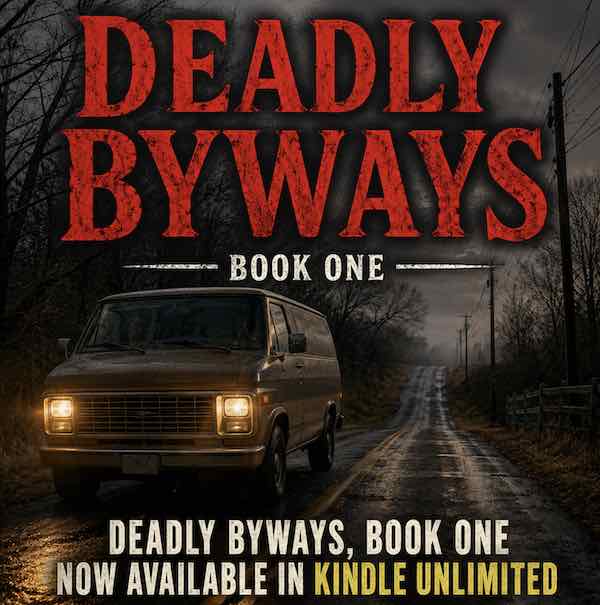
You might also want to check out my DEADLY BYWAYS series.
Deadly Byways consists of six novels set in the late 1970s and early 1980s. Like “The Door-to-Door Man,” these stories explore the darker side of an era that many of us remember with nostalgia—but which had plenty of dangers and shadows of its own.
If you enjoy suspense stories about ordinary people confronting extraordinary dangers—especially stories set against the backdrop of America several decades ago—DEADLY BYWAYS may be for you.
In the meantime, I hope you enjoy “The Door-to-Door Man.”
And remember: be careful who you open your front door to.
When I logged on to Amazon (on the customer-facing side) today, I noticed a new John Grisham short story, “The Law Student.” The short story is a standalone prequel to one of Grisham’s novels. “The Law Student” is about 5,000 words long.
This seems to be a trend in New York publishing of late: novelists publishing short stories that are either based completely in standalone narratives, or are lead-ins to novel-length works.
I’m personally a fan of short stories, both as a reader and as a writer. I recently finished reading a Tom Clancy doorstopper of a novel from the 1980s: Red Storm Rising. Published in 1987 and weighing in at 725 pages, Red Storm Rising was the perfect thick-spined novel for the mall bookstore era. But Red Storm Rising was also at least two hundred pages too long.
There are many perfectly serviceable story ideas that simply don’t require or justify those massive lengths. Consider, for example, my horror tale Family Secrets. This one came to just under 16,000 words. Technically speaking, Family Secrets is a novelette. You might also call it a “long” short story.
Family Secrets is a very gripping story at 16,000 words, if I may say so myself. I would not, however, have wanted to expand the story to a typical 60,000-word novel length. Family Secrets is based on a nightmare I had back in April. Stories based on dreams, even horror stories, are seldom the stuff of full-length novels.
Needless to say, short stories should be priced appropriately. This is a rule that I always follow. I also place most of my fiction in Amazon’s Kindle Unlimited program, where you can read it for free.
Last night I went out for a walk in my neighborhood around 7 pm. (We’ve had an unseasonably warm spell here in the Cincinnati area.) I didn’t take into account how quickly the dusk settles in this late in the year. I was only halfway out when it suddenly became very…well, dark.
I therefore walked back to my house in the dark. The houses around me were festooned with various Halloween decorations: skulls, black cats, and even some cool Halloween projector lights.
I love Halloween. For me, Halloween is the time when we mortals come to terms with two constants of human existence: a.) the unknown, and b.) the inevitability of death.
The celebration of Halloween is an act of acceptance. Our lives will always contain tragedy, dissatisfactions, and uncertainty. But we cannot allow ourselves to paralyzed by fear…or by sadness.
Halloween is a time when we laugh at death, and embrace our mortality.
A few years ago, I wrote a Halloween novel called 12 HOURS OF HALLOWEEN. This nostalgic, coming-of-age horror tale is set on Halloween night, 1980. Check it out here.
I was a teenager during the 1980s. Where drugs were concerned, this was the era of “Just Say No.” This was little more than a decade into the so-called “war on drugs”
Adults were concerned that we were going tobecome potheads—like one of the characters in a Cheech & Chong movie—or, perhaps, like Jeff Spicoli in Fast times at Ridgemont High.
Even the well-heeled suburban kids in The Breakfast Club indulged in weed on the sly in those days. But if you were caught, the penalties could be severe—in theory, at least. In the 1980s, simple possession for personal use could result in jail time.
Once again—in theory. The legally stipulated penalties were often applied unevenly, based on racial and economic factors. The law was not color-blind. Nor was it money-blind.
The legalization boom
All of that changed in the early 21st century, when the mood regarding marijuana decisively shifted. This was the era of legalization. Washington and Colorado were the first U.S. states to legalize recreational cannabis in November 2012. Other states followed suit to greater or lesser degrees.
Before long recreational marijuana use became not just something that was tolerated, but a full-fledged industry. People weren’t just growing and purchasing pot for their own personal use. Now they were growing and purchasing it to sell to others at a profit. Marijuana had gone from a forbidden activity to one that was more or less encouraged by the new legal framework.
Massachusetts has never been a state to miss out on nitwittery. So of course, Massachusetts voters approved recreational marijuana in 2016. The marijuana industry has grown in Massachusetts since then. In September of this year, the state’s Cannabis Control Commission reported that recreational marijuana sales had surpassed $10 billion in the Bay State. It takes quite a few potheads to reach sales figures like that.
The wrath of unintended consequences
But not everyone in Massachusetts has been happy about this outcome.
This brings us to the concept of unintended consequences—something that those pesky conservatives like to bring up. It is ironic that Massachusetts, one of the most left-leaning states in the USA, has come to the realization that legalizing pot—and turning it into a full-fledged industry—has brought some unintended and undesirable consequences.
There have been concerns about an increase in marijuana use among young people. If weed is legal—and the government practically encourages it—why shouldn’t young people use it, after all?
There have also been concerns about impaired driving. One of the things you might remember from those 1980s movies is that people don’t drive particularly well when they’re high on weed. This is a lesson we learned long, long ago with alcohol.
And speaking of old lessons… Massachusetts was one of the first states to ban smoking in public places, because cigarette smoking isn’t good for you. It turns out that marijuana is also bad for your health—especially when you smoke it. It’s not particularly good for your focus or your mental health, either.
All of these things are true—and have been true forever—even if you happen to think that marijuana is some cool new hipster drug.
Question 8
This has led to Question 8, an effort to repeal most aspects of Massachusetts’ weed legalization framework. Question 8 is on the ballot in the Bay State this election season.
Question 8 would eliminate recreational marijuana sales, along with the accompanying tax and regulatory framework. In other words, all the things that make recreational marijuana an ordinary business activity.
This wouldn’t be a return to the harsh anti-weed laws of the 1980s, though. Adults twenty-one years old and above could still possess up to one ounce without getting into trouble. Medical marijuana would also remain legal.
If approved, all of these measures would take place on January 1, 2028. Massachusetts would thereby become the first state to repeal a voter-approved recreational marijuana market.
There would be winners and losers, of course. There always are when laws change. If you’ve recently invested in a recreational marijuana-related business in Massachusetts, you might or might not be willing to make the personal financial sacrifice for the sake of public health.
The challenge of victimless crimes
We tend to veer from one extreme to the other where victimless crimes are concerned. Victimless crimes include weed use, gambling, and prostitution.
No one thinks that these activities are socially beneficial. But should they be made illegal? Should consenting adults be prohibited from participating in these activities when they directly harm no one, at least in theory?
Victimless crimes are not always victimless when practiced at scale, though. Widespread marijuana use can endanger all of us when we’re forced to drive alongside intoxicated drivers.
Commercialized sex is another tough one. Although there is an effort to portray all instances of commercial sex as victimization, there is much evidence to the contrary here. High-end sex workers like Alice Little and Meida Marek are clearly women with options, who have chosen sex work for reasons of profit—not coercion or desperation.
That said, no one wants to see a brothel in the local shopping mall. No one would welcome sex workers speaking at the local high school on the next career day.
We have many choices on a continuum between open encouragement of a socially deleterious activity—and ruthless, uncompromising prohibition. One option is to allow these activities to take place on a small scale in private, but without the legal and societal stamp of approval that a formal regulatory framework brings. This means that the government can’t tax these activities. But the point is to keep the total revenue generated by these activities low to begin with.
Another option is selective enforcement. In Ohio, where I live, it’s legal to gamble so long as the government gets a piece of the action. Ohio has a state lottery, and we also have legal casinos. It is, however, illegal in Ohio to organize an unregulated poker game for money in your home. Employee betting pools are also technically illegal.
But authorities in Ohio aren’t going out of their way to search out such instances of unregulated gambling, not even with Republicans in charge. Restrain your home poker games to a small scale, and you probably won’t get in trouble.
I would argue for a similar approach to commercial sex. In 2013, authorities in Kennebunk, Maine, jailed Zumba instructor Alexis Wright for selling sexual favors to men from the privacy of her exercise studio. Wright was not coerced, nor was she coercing anyone else. Alexis Wright was a 30-year-old woman selling a voluntary service to adult men in their 40s and 50s. Yet they arrested her and put her in jail. The libertarian in me bristles at such authoritarian nonsense.
At the same time, I don’t want brothels in the local shopping mall, or sex workers speaking at the next career day at my local high school. In other words, I come down in the mushy middle where commercial sex is concerned, just like I come down in the mushy middle where recreational marijuana is concerned.
A more nuanced, more ambiguous approach to victimless crimes won’t please purists at either extreme. But from a societal perspective, ambiguity makes sense. There are certain activities that we don’t want to encourage at scale among the general population—especially where children and minors are concerned. At the same time, however, consenting adults should be allowed to do what they want with their own resources and their own bodies, so long as they aren’t directly harming others, and they’re mostly keeping their activities to themselves. The mushy middle is not a perfect approach to victimless crimes, but it’s better than either of the alternative extremes.
Both my bartending friends and the media tell me that Gen Z is drinking much less than previous generations did. Gen Z’s teetotaling ways may even have a long-term impact on the alcoholic beverages and bar industries. We shall see.
Not so with my generation, Generation X. My generational cohorts were drinkers from the get-go. Now, in their late 50s and early 60s, they haven’t stopped. Ours is the generation keeping bars and distilleries alive.
But not all of us Gen Xers are drinkers. I underwent an early period of experimentation with alcohol, and quickly determined that drinking was not for me.
As a result, I did much more drinking when I was underage than I ever did as a legal adult. In fact, I did most of my drinking during my eighth-grade year. How did I acquire alcohol at the age of 13? You’ve heard those stories about unsupervised Gen X kids in the ’80s, right? Well there’s definitely an element of truth to them.
As an adult I have consumed almost no alcoholic beverages. If you could assemble all the beer, booze, and liquor I’ve consumed since age 21, it would definitely fit on a single tabletop.
The last time I consumed an alcoholic beverage was in Detroit in September 2002. I was in the Motor City for an automotive industry show. My colleagues and I were waiting for a table at a crowded restaurant. The logistics of the situation required us to wait in the bar area.
While I don’t care for alcoholic beverages, I’m not an ideological teetotaler either. I decided to take advantage of the situation to have a rare tipple. Since this was a rare occasion I decided to get something off the beaten path.
I purchased and drank a dark Guinness.
I found the taste of Guinness to be not horrible, but definitely not something I would go out of my way to drink.
And I definitely did a more manly job of finishing off my Guinness than did Mark Zuckerberg. The Meta CEO and founder was recently filmed drinking a glass of the stuff with an unmistakable grimace. Zuckerberg, born in 1984, is neither a Gen Xer nor a Gen Z, so we can only wonder if he’s a habitual drinker otherwise.
Columbus Day has rolled around once again, with the usual controversies.
Are you a bad person if you recognize Columbus Day? Are you hopelessly woke if you recognize Indigenous Peoples’ Day?
As the above video shows, Italian Americans in New York City already feel slighted by the city’s divisive new mayor on this day. Mamdani no doubt loathes Columbus Day and everything it stands for, though he also chooses to live in the United States.
There is nothing wrong with having an Indigenous Peoples’ Day. On the contrary, it might actually be a good idea.
We have all kinds of holidays, after all. We even have an Albanian Heritage Day (May 19) and a National Dog Day (August 26). If we can make room for those two days of commemoration, then surely we can have an Indigenous Peoples Day.
The controversy arose not because of the holiday itself, but because of the deliberate attempt to replace Columbus Day with a competing holiday.
Indigenous Peoples Day could have been another national commemoration. Instead, it became an attempt to erase Columbus Day, and that brought about some bad feelings and controversy.
But then again, that was the intention all along. October 12 was not chosen at random.
I agree with Matt Walsh on certain issues, but I have never really been a Matt Walsh fan.
It’s the old saw of the stopped clock that tells the correct time twice a day. I also agree with Bernie Sanders on certain issues. That doesn’t mean I’m ready to join the DSA.
Like many youthful commentators in the political arena, Matt Walsh likes to interpret everything as an oppression narrative. Most recently, he has decided that the average Boomer is stealing from 35-year-olds in order to blow their Social Security checks on slot machines. (I’m not exaggerating here. Walsh actually makes this assertion.)
This no doubt relates to chagrin over the fact that millennials and Gen Zs are not reproducing at the expected rates. Matt Walsh, like JD Vance and other right-leaning social engineers, wants to redirect both public and private funds in order to encourage more marriage and childbearing. So the hobgoblin of the greedy, grasping 70- or 80-something fits neatly into this narrative.
I remember the 1980s; Walsh does not. (Walsh was in diapers in 1986.) I was a teenager back then, and my Boomer parents had noticeably fewer assets than my WWII-generation grandparents—who were also drawing Social Security.
Matt doesn’t seem to realize that this is the way Social Security has always been.
And this brings us back to a fundamental problem with Matt Walsh. Walsh is no dummy, but he has always been callow, petulant, and an aspiring authoritarian. Walsh has never been anything but a political commentator. He decided to start explaining the world before he had lived enough to fully understand the world.
You can challenge the premise of the Social Security system, if you wish. But to turn this into a “Boomer plot” is just silly.
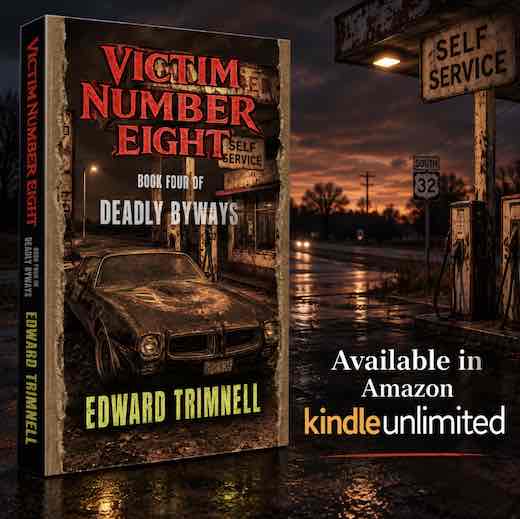
The latest installment of DEADLY BYWAYS is now available on Amazon and in Kindle Unlimited.
Victim Number Eight (Deadly Byways Book 4)
Amazon book description:
The Bywayman has taken another victim.
A Saturday night in January 1982.
The teenage Sharon Asher was supposed to be going on a date.
Instead, her date is murdered at a lonely gas station—and Sharon disappears into the night.
Detective Will Hayworth knows exactly what that means.
Sharon is the eighth person believed to have fallen victim to the mysterious predator stalking the back roads of southwest Ohio. The police have a description of the killer. They have a composite sketch. They even have a possible suspect.
There is only one problem.
They are looking for the wrong man.
While the investigation follows a false trail, Sharon awakens in an underground prison beneath a remote barn. Another captive is already there. And the man holding them has developed a system for keeping his secrets buried.
But Sharon isn’t willing to become just another missing-person photograph.
As the police struggle to find a killer who has spent years hiding in plain sight, Sharon begins looking for a way out.
And inside the killer’s own home, someone else is beginning to realize that something is terribly wrong.
Victim Number Eight is the fourth novel in the Deadly Byways series—a psychological crime thriller set in early-1980s Ohio, where the most dangerous man on the road may be the one no one suspects.
More bad news out of Russia. There are reports of a 28-year-old female employee of Russia’s Irkutsk Anti-Plague Research Institute dying of pneumonic plague a few days ago.
Russian officials have not confirmed the cause of the woman’s death. But they insist that they are in control of the situation. (Some two hundred contacts of the deceased lab worker have been placed under medical observation.)
There were several close calls related to Soviet bioweapons programs during the Cold War (including the 1979 Sverdlovsk anthrax accident). In each case, Soviet authorities declined to make full disclosures of the extent of the exposures. Thankfully, none resulted in worldwide pandemics.
The Kremlin was cagey even about acknowledging the deaths of one of its leaders. Between 1982 and 1985 (just before Gorbachev was named General Secretary of the USSR), three Soviet leaders died in relatively quick succession: Leonid Brezhnev, Yuri Andropov, and Konstantin Chernenko.
In each case, the Kremlin was slow to confirm the deaths to the Western media. This led to jokes about hypothetical Pravda headlines like “Stalin not feeling well” and “Lenin under the weather”. (By the mid-1980s, both Lenin and Stalin had been dead for decades.)
Where Russia is concerned, we should always hope for the best but we should never assume that the Kremlin is giving us the full story.
You might have noticed that we almost never hear any positive news stories about fraternities and sororities.
Yes, I’m alluding to the recent “Cornell 7” case.
But the details of that case are not what I’m going to discuss here—as the relevant facts are still coming in, and everyone else is talking about that incident.
Instead, I’m going to begin at the University of Cincinnati, in January 1982.
Before many of you were even born.
***
On Sunday, January 17, 1982, the University of Cincinnati chapter of Sigma Alpha Epsilon (SAE) held what it called a “Martin Luther King Jr. trash party.” The event was held the night before UC’s observance of King’s birthday.
Guests were encouraged to bring items such as canceled welfare checks, boomboxes, and crowbars. Ku Klux Klan hoods were welcome. Invitations for the party also suggested that attendees bring photos of James Earl Ray—Martin Luther King’s assassin.
According to contemporary accounts, one partygoer wore a Martin Luther King mask with a bullet hole in it.
All that happened back in 1982.
***
I was not a student at the University of Cincinnati in January 1982. I was an eighth-grader in the nearby suburbs. Sigma Alpha Epsilon’s “Martin Luther King Jr. trash party” was a local source of ignominy in Cincinnati that winter. The incident was a common topic on local TV and radio channels.
The scandal eventually received national attention, but this was limited. (Remember: there was no internet back then.)
In February 1982, UC president Henry Winkler ordered a two-year suspension of Sigma Alpha Epsilon. That suspension has long since expired, of course. Sigma Alpha Epsilon has a chapter on the University of Cincinnati campus today. Some of the current members’ fathers, one imagines, had not even been born yet in 1982.
***
Alleged gang rapes, and incidents like the Martin Luther King Jr. trash party, are sensational events that linger in the media for months or even years. Far more common are the comparatively mundane stories of a new pledge dying from alcohol poisoning after drinking himself into oblivion as part of the fraternity’s hazing procedures.
What about sororities, though? Where sororities are concerned, the news stories are usually a little less toxic. The big problem with sororities seems to be the incredible amounts of money that parents will invest trying to get their daughter into a very specific sorority. Often this involves spending thousands of dollars for sorority rush consultants and various designer brands.
But back, briefly, to the Cornell 7 case. The alleged perpetrators were all members of the Chi Phi fraternity chapter at Cornell University. The alleged victim was a member of a sorority. Frat boys and sorority sisters tend to hang out together, attend the same parties, and hook up together.
***
None of the above implies that every member of a fraternity is a racist or a rapist. Nor can we conclude that every member of a sorority is a hapless ingénue, ready to fall for any proposition presented by the right fraternity brother.
But we can make certain speculations. There are people who have a deep emotional need for group affiliation. Such individuals have a strong tendency to merge their own identities with the identity of a particular group—a group that gives them a sense of acceptance and social standing.
Such individuals are often attracted to fraternities and sororities. People with low degrees of personal independence naturally gravitate toward these organizations. This is the selection effect in action.
Members of fraternities and sororities are not necessarily any more malevolent or gullible at an individual level than members of the general population. They are, however, arguably more susceptible to peer pressure. The need to be liked and accepted by a particular group can override individual codes of ethics—and even self-preservation.
Consider the Sigma Alpha Epsilon “MLK trash party of 1982.” Attendees at this event could not reasonably have expected to acquire conventional rewards such as sex, money, or career advancement. They could, however, acquire more peer group approval.
Ayn Rand once wrote that the word “we” is the root of all evil. I wouldn’t go quite that far. Moreover, excessive contrarianism—when practiced for its own sake—can become counterproductive.
But college fraternities and sororities do seem to bring out the worst in people who suffer from a strong need for group affiliation. Adulthood is supposed to be about personal growth and independence. Fraternities and sororities encourage exactly the opposite—even when tragedies and public scandals aren’t their result.